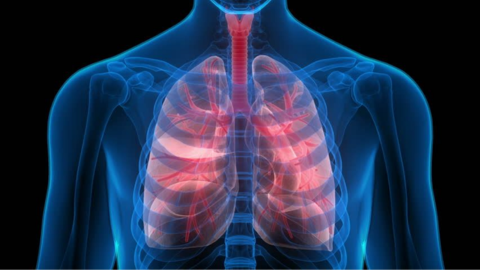
If you’re struggling with breathing problems, persistent cough, chest tightness, or post-COVID symptoms, your doctor might recommend a few tests to assess your lung function and respiratory health.
But what do these tests actually do? And why are they important?
In this blog, let’s demystify the most frequent lung tests — PFT, Chest X-ray, HRCT, and many more — so you understand clearly what you should anticipate and how these are used to diagnose lung disorders such as asthma, COPD, interstitial lung disease, and lung infection.
Why Do I Need Lung Tests?
Your lungs do the job of getting oxygen in and carbon dioxide out. When this process is disrupted — by infections, allergies, pollution, or chronic disease — tests are needed to:
- Assess how well your lungs function
- Screen for inflammation, infection, or damage
- Drive proper treatment for diseases such as asthma, COPD, or pneumonia
- These tests are painless, safe, and commonly performed on an outpatient basis.
1. Pulmonary Function Test (PFT)
What is it?
A PFT tests how well your lungs are functioning — how much air you can breathe in/breathe out and how well your lungs pass oxygen to your body.
Used to diagnose:
- Asthma
- COPD (Chronic Obstructive Pulmonary Disease)
- Pulmonary fibrosis
- Allergic bronchitis
What do you do during the test?
You’ll be instructed to blow hard into a mouthpiece attached to a machine. The test might involve medications (such as a bronchodilator) to observe how your lungs react.
How long does it take?
Approximately 20–30 minutes.
Tip: Never have a heavy meal, smoke, or take bronchodilator medicines (if not recommended) prior to the test.
2. Chest X-Ray
What is it?
A chest X-ray is a simple and pain-free imaging procedure that X-rays your lungs, heart, and chest bones.
Used to detect:
- Pneumonia
- Tuberculosis
- Fluid in lungs
- Collapse of the lung
- Tumors or infections
What happens during the test?
You’ll stand against an X-ray machine, take a deep breath, and hold still for a few seconds.
How long does it take?
Just 5–10 minutes.
Chest X-rays are often the first-line investigation for any lung symptoms.
3. HRCT Chest (High-Resolution CT Scan)
What is it?
An HRCT provides highly detailed, cross-sectional images of your lungs, allowing doctors to spot abnormalities that a regular X-ray might miss.
Used to diagnose:
- Interstitial lung disease (ILD)
- Pulmonary fibrosis
- COVID lung scarring
- Lung cancer
- Bronchiectasis
What happens during the test?
You lie on a table while the scanner takes X-ray pictures of your chest in a series of rotating images. You might need to hold your breath briefly.
Is it safe?
Yes, although it uses a tiny bit more radiation than an X-ray. It’s extremely useful for precise diagnosis.
4. Spirometry
What is it?
Spirometry is a component of PFT, or measuring how much and how quickly you can breathe air out of your lungs.
Used to diagnose:
- Asthma
- COPD
- Lung obstruction
Why is it important?
It helps determine how severe your breathing condition is and how well medications are working.
5. Sputum Test (Microscopy & Culture)
What is it?
If you have a productive cough, a sputum test can identify bacteria, fungi, or TB (tuberculosis) in your phlegm.
Used to detect:
- Tuberculosis (TB)
- Lung infections
- Fungal infections
How is it done?
You give a sample of phlegm, which is examined in a lab under a microscope and by culture.
6. Allergy Testing (For Asthma or Allergic Rhinitis)
What is it?
Skin prick or blood tests to determine which allergens can cause your asthma or allergic bronchitis.
Why is it useful?
Helps to personalize treatment and limit exposure to environmental factors such as dust, pollen, pets, or food.
When to Have Lung Tests Conducted?
You must visit a pulmonologist and get these tests done if you experience:
- Recurring cough for over 2 weeks
- Shortness of breath or wheezing
- Recurrent chest infections
- Respiratory problems after COVID
- Snoring or sleep apnea symptoms
- History of smoking, asthma or COPD
Most lung issues can be controlled well if diagnosed promptly. Tests such as PFTs and HRCT scans provide us with a clear idea of what’s amiss within the lungs, so we can address the cause — not the symptoms.
Lung Care & Testing in Pimple Saudagar, Pune
Dr. Yogesh Agrawal provides end-to-end lung diagnostics and care, including:
- Pulmonary Function Testing (PFT)
- Allergy Testing
- HRCT Chest referrals
- Treatment for Asthma, COPD, Tuberculosis, Long COVID & more
Call us today to book your consultation
Recent Posts
-
 The Compliance Threshold: Why the First Two Weeks of Airway Therapy Dictate How Your Cardiovascular System Recovers Over the Next Decade
 -
 The Complex Sleep Apnea Transition: Why Treating an Obstruction Can Sometimes Unmask a Completely Separate Neurological Breathing Flaw
 -
 The Brainstem’s Silent Alarm: What Happens When the Central Nervous System Forgets to Tell the Diaphragm to Move
 -
 Acute vs. Chronic Bronchitis: Symptoms, Causes, and Treatment Explained
 -
 Shortness of Breath: 8 Possible Causes and When to Consult a Chest Physician