Gravity’s Silent Chokehold: The Midnight Physics of a Collapsing Throat
At 2:14 AM, the only sound in Rahul’s apartment in Chinchwad should have been the faint hum of the ceiling fan. Instead, it was an aggressive, choking rattle that shook him awake, gasping for air as if he had just surfaced from a deep pool.
Rahul, a 34-year-old software architect, sat upright in bed, his heart hammering against his ribs. Just an hour earlier, he had been sitting comfortably on his sofa, working on his laptop, breathing perfectly through his nose. He felt fine. He didn’t have a cold, his nasal passages were clear, and he wasn’t congested. Yet, the moment his head hit the pillow to sleep, an invisible weight seemed to settle directly onto his throat.
He looked at his hands, trying to calm his racing pulse, wondering how a body that functions flawlessly during the day can suddenly turn against itself the moment it lies down to rest.
And then came the familiar thought most people have during these terrifying midnight awakenings:
Why does my breathing only fail me when I try to sleep?
If you have ever gone to bed feeling perfectly healthy, only to wake up coughing, choking, or fighting a violent midnight snore, you are not alone. And no, it is not in your head. There is actually a brutal law of physics that alters your airway tissue tension the exact moment your body shifts from an upright posture to a horizontal plane.
The Science of the Vertical Defiance
During the day, while you are walking, sitting, or standing, gravity is your airway’s silent ally. Your head sits vertically above your shoulders, and your upper airway remains firm, rigid, and patent. The structural columns of your throat easily withstand atmospheric pressure because the muscles pulling your jaw and tongue forward are actively engaged. Even when you relax at your desk, natural muscle tone keeps the breathing passage wide open.
But the moment you transition from an upright position to a horizontal plane, you unknowingly trigger a physical shift that dramatically alters the mechanics of your throat.
Without the vertical clearance of daytime posture, gravity stops pulling downward toward your chest and begins pulling straight backward toward your spine. If you sleep supine—flat on your back—the weight of your tongue, your soft palate, and any natural tissue around your neck shifts position. The flexible, pliable lining of your upper airway is suddenly forced to fight a completely different gravitational vector.
Beyond the physics of posture, there is the biological reality of deep sleep. As your brain waves slow down and you drift into a restful state, your nervous system commands your motor muscles to drop their daytime defense. The tissues lining your upper airway naturally lose their structural tautness. For a simple snorer, this causes the loose tissue to vibrate wildly like a sail caught in a gale. For someone prone to airway failure, the tissue tension drops completely, turning a background rattle into a mechanical collapse.
What Your Airway Mechanics Are Trying to Tell You
Your throat muscles don’t have a voice, so they use physical nighttime and daytime disruptions to communicate a structural problem. The nature of that mechanical resistance is a coded message about what is happening to your tissue tension beneath the surface:
- A Positional, Heavy Rattle: If your snoring only reaches ear-splitting volumes when you roll onto your back, your airway is telling you that its structural tone is too weak to resist the backward pull of gravity.
- The Sudden Midnight Gasp: This is a clear signal of complete mechanical airway failure. The throat tissues have collapsed so thoroughly that the oxygen pipeline is entirely sealed, forcing your brain to trigger an emergency adrenaline rush to break the chokehold.
- A Deep, Relentless Afternoon Fatigue: When gravity repeatedly chokes your airway at night, your brain is forced out of deep, restorative sleep to keep you breathing. You might technically be in bed for eight hours, but your cells are only receiving a fraction of that in actual restoration.
Ignoring these physical shifts means allowing systemic nighttime stress to damage your blood vessels, leading to chronic daytime exhaustion, resistant high blood pressure, and long-term strain on your heart.
The Sleep Specialist Difference: What to Expect
Rahul didn’t just want a temporary mouth guard or a generic internet fix; he wanted his life back. Walking into a specialized sleep disorders clinic the next morning, he found a precise, clinical environment designed to analyze the physics of his breathing. Under expert guidance, patients transition from late-night panic to objective, calculated data.
When you seek a professional evaluation, you can expect:
- An Empathetic Clinical Consultation: We look closely at your physical history, evaluate your daytime energy drops, and examine the structural architecture of your jaw, neck, and throat passages.
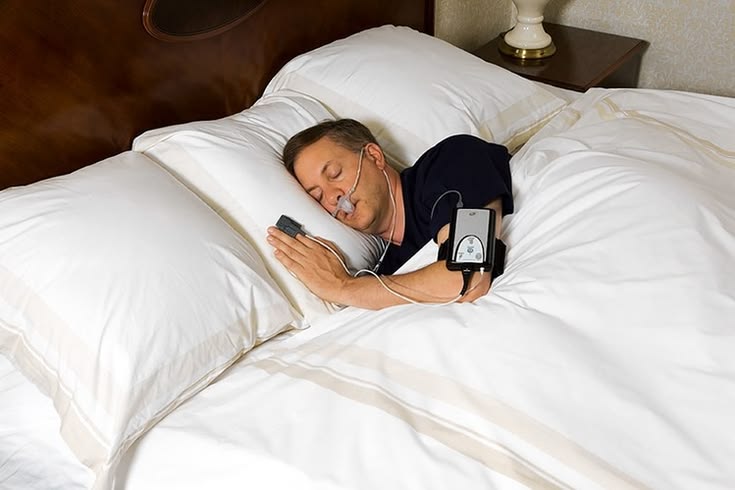
- Precision Sleep Study Diagnosis: Using advanced diagnostic tools, we measure exactly how your body responds to the horizontal plane. By tracking your brain waves, oxygen saturation drops, and breathing patterns through an in-lab workshop or a convenient home sleep test, we calculate your precise Apnea-Hypopnea Index (AHI).
- A Tailored Treatment Approach: We map out an individual care plan based on your severity, showing you exactly how to restore the tissue balance required for uninterrupted rest.
Professional Solutions for Lasting Airway Relief
Based on advanced clinical protocols, we provide targeted medical solutions to counteract gravity and maintain constant tissue tension all night long:
- Continuous Positive Airway Pressure (CPAP) Therapy: The undisputed gold standard treatment for moderate-to-severe sleep apnea. This non-invasive device delivers a gentle, continuous stream of air through a specialized mask, acting as an invisible pneumatic splint that keeps the airway walls safely open against gravity.
- Revolutionary Non-Surgical Laser Treatment: An advanced therapeutic approach that uses targeted laser technology to treat the root cause of snoring and airway collapse. The thermal energy works to tighten and tone loose, sagging oral tissues, restoring their natural structural resistance.
- Customized Oral Appliances: Often highly effective for mild sleep apnea or specific structural jaw shapes. These specialized mechanical devices gently hold the lower jaw forward while you sleep, preventing the tongue from sliding backward into the throat.
- Targeted Exercise & Diet Guidance: Clinical advice focused on weight management to reduce heavy tissue mass around the neck, combined with positional therapy to keep you off your back, and specific mouth exercises designed to strengthen the airway muscles.
Conclusion
Waking up gasping in the middle of the night is a traumatic experience, but it does not have to be your permanent reality. It is a physical signal from your body that your airway tissue needs expert structural support to fight gravity. By choosing a specialized clinical team that understands the deep physics of sleep medicine, you can break the dangerous cycle of nighttime suffocation. Correcting your breathing alignment today is the single best investment you can make for your heart, your brain, and your future.
Dr. Yogesh Agrawal, a snoring treatment specialist in Pune and Pimpri-Chinchwad, is a pulmonologist, obesity specialist, and sleep specialist with over 14 years of clinical experience, consulting at Aditya Birla Memorial Hospital, Lotus Multi-specialty Hospital, and Breathe n Smile, with his main clinic located at 108-C, Khivansara Complex, Datta Mandir Road, Wakad Phata, near Dange Chowk, Pune, Maharashtra 411033; for appointments, contact +91 8149400043 or email dryogesh1980@gmail.com.
Explore Our Medical Services:
Learn more about our diagnostic procedures by reviewing our resources on Sleep Study Diagnosis, different Sleep Apnea Types, and specialized Sleep Apnea Treatment options.
Recent Posts
-
 The Compliance Threshold: Why the First Two Weeks of Airway Therapy Dictate How Your Cardiovascular System Recovers Over the Next Decade
 -
 The Complex Sleep Apnea Transition: Why Treating an Obstruction Can Sometimes Unmask a Completely Separate Neurological Breathing Flaw
 -
 The Brainstem’s Silent Alarm: What Happens When the Central Nervous System Forgets to Tell the Diaphragm to Move
 -
 Acute vs. Chronic Bronchitis: Symptoms, Causes, and Treatment Explained
 -
 Shortness of Breath: 8 Possible Causes and When to Consult a Chest Physician